Starting with Microsoft Server 2022: Should Your US Small Business Choose Standard or Datacenter?, this opening paragraph aims to engage readers with a captivating overview of the topic.
Detailing the significance and key features of Microsoft Server 2022 for small businesses in the US.
Introduction to Microsoft Server 2022
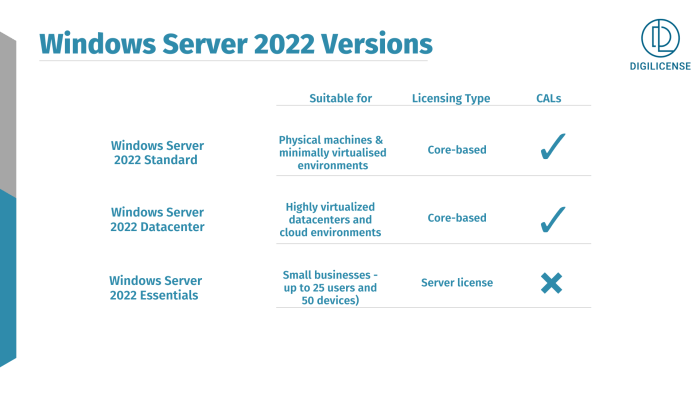
Microsoft Server 2022 is the latest version of Microsoft's server operating system, designed to provide enhanced performance, security, and innovation for small businesses in the US. This new release comes packed with features tailored to meet the evolving needs of modern businesses, offering a reliable and efficient platform for managing data, applications, and infrastructure.
Key Features of Microsoft Server 2022
- Enhanced Security: Microsoft Server 2022 incorporates advanced security measures to protect sensitive data and defend against cyber threats, ensuring a secure environment for business operations.
- Improved Performance: With optimized performance capabilities, Microsoft Server 2022 enables faster processing speeds and enhanced efficiency, allowing businesses to handle workloads more effectively.
- Hybrid Capabilities: This version offers seamless integration with Azure services, facilitating hybrid cloud deployments and enabling businesses to leverage the benefits of both on-premises and cloud environments.
- Container Support: Microsoft Server 2022 includes enhanced support for containers, making it easier for businesses to deploy and manage containerized applications efficiently.
Benefits for Small Businesses in the US
- Cost-Efficiency: By leveraging the features of Microsoft Server 2022, small businesses can optimize their IT infrastructure, reducing costs associated with maintenance and downtime.
- Enhanced Productivity: The improved performance and security features of Microsoft Server 2022 help small businesses streamline their operations, boosting productivity and overall efficiency.
- Scalability: With the scalability options provided by Microsoft Server 2022, small businesses can easily expand their infrastructure as needed, accommodating growth and evolving business requirements.
Understanding Standard vs. Datacenter Editions
When it comes to choosing between the Standard and Datacenter editions of Microsoft Server 2022, it's important to understand the key differences in features, capabilities, and limitations to make an informed decision for your small business.
Standard Edition
- The Standard edition is designed for small to medium-sized businesses with less demanding virtualization needs.
- It offers basic server functionality and supports up to two virtual instances.
- Features like storage migration services, failover clustering, and shielded virtual machines are included in the Standard edition.
- It is cost-effective for businesses that do not require advanced virtualization features or extensive scalability.
Datacenter Edition
- The Datacenter edition is ideal for businesses with high virtualization needs and demanding workloads.
- It offers unlimited virtual instances and advanced features like software-defined networking, storage spaces direct, and storage replica.
- Datacenter edition provides better scalability, reliability, and performance for businesses with critical applications and large-scale virtualization requirements.
- It is more expensive than the Standard edition but offers comprehensive features and capabilities for enterprise-level operations.
Considerations for US Small Businesses
When it comes to choosing between the Standard and Datacenter editions of Microsoft Server 2022, US small businesses need to carefully consider various factors to ensure they select the option that best aligns with their needs and budget.
Cost Implications
- Standard Edition: Generally more cost-effective for small businesses with limited server requirements and fewer virtual machines.
- Datacenter Edition: Higher upfront cost but may be more cost-effective in the long run for businesses with a larger number of virtual machines and advanced features.
- Consider the total cost of ownership, including licensing, maintenance, and hardware requirements, to make an informed decision.
Scalability Options
- Standard Edition: Designed for smaller-scale deployments, limiting the number of virtual machines and advanced features available.
- Datacenter Edition: Offers unlimited virtualization rights, making it ideal for businesses planning to scale up their server infrastructure in the future.
- Consider future growth projections and the need for scalability when choosing between the two editions.
Implementation and Management
When it comes to implementing and managing Microsoft Server 2022 in a small business environment, it is crucial to understand the steps involved in setting up both the Standard and Datacenter editions. Let's dive into the specifics of each edition and share best practices for efficient management.
Implementing Microsoft Server 2022 Standard Edition
- 1. Purchase and License: Acquire the necessary licenses for Microsoft Server 2022 Standard edition based on the number of users and devices in your small business.
- 2. Installation: Install the Standard edition on a dedicated server hardware following the system requirements provided by Microsoft.
- 3. Configuration: Configure the server settings, user accounts, and security protocols according to your business requirements.
- 4. Data Migration: Migrate existing data and applications to the new server while ensuring compatibility and data integrity.
- 5. Testing and Deployment: Conduct thorough testing to ensure the server is functioning correctly before deploying it for production use.
Implementing Microsoft Server 2022 Datacenter Edition
- 1. Licensing and Activation: Obtain the necessary licenses for Microsoft Server 2022 Datacenter edition and activate the product to access all features.
- 2. Virtualization Setup: Configure virtualization features to maximize resource utilization and scalability for your small business applications.
- 3. High Availability: Implement failover clustering and other high availability features to ensure continuous operation and minimize downtime.
- 4. Storage Management: Utilize advanced storage management capabilities to optimize storage resources and improve performance.
- 5. Scalability Planning: Plan for future growth by leveraging the scalability features of the Datacenter edition for expanding your infrastructure.
Best Practices for Managing and Maintaining Microsoft Server 2022
- Regular Updates: Keep the server up to date with the latest patches and security updates to protect against vulnerabilities.
- Backup and Recovery: Implement a robust backup and recovery strategy to safeguard critical data and applications in case of unexpected failures.
- Monitoring and Performance Tuning: Monitor server performance metrics and optimize settings to ensure efficient operation and resource utilization.
- Security Measures: Enforce strong security protocols, access controls, and encryption to protect sensitive information stored on the server.
- User Training: Provide training to users on server usage, data handling best practices, and security awareness to prevent data breaches.
Ending Remarks
Concluding with a summary that encapsulates the discussion in an engaging manner, leaving readers with a clear understanding of the topic.
FAQ Overview
What are the key differences between Standard and Datacenter editions of Microsoft Server 2022?
The Standard edition is suitable for small businesses with basic needs, while the Datacenter edition offers advanced features for larger enterprises.
How can a US small business decide between the Standard and Datacenter editions?
Consider factors like budget, scalability requirements, and specific business needs to determine the most suitable edition.
What are the cost implications of choosing either edition for a small business?
The Datacenter edition is typically more expensive due to its advanced features, while the Standard edition is more budget-friendly.
How can a small business effectively manage and maintain Microsoft Server 2022?
Implement best practices for managing the server, including regular updates, backups, and security measures to ensure smooth operation.