Delving into Nursing Home Abuse Lawyer: Signs You Should Never Ignore, this introduction immerses readers in a unique and compelling narrative. From recognizing common signs to understanding legal aspects, this topic sheds light on crucial information that should not be overlooked.
Exploring the different facets of nursing home abuse and the importance of seeking legal help, this discussion aims to educate and empower individuals to take action against such injustices.
Recognizing Signs of Nursing Home Abuse
It is crucial to be aware of the signs of nursing home abuse to protect our loved ones in care facilities. Recognizing these signs can help prevent further harm and ensure the well-being of elderly residents.
Common Signs of Nursing Home Abuse
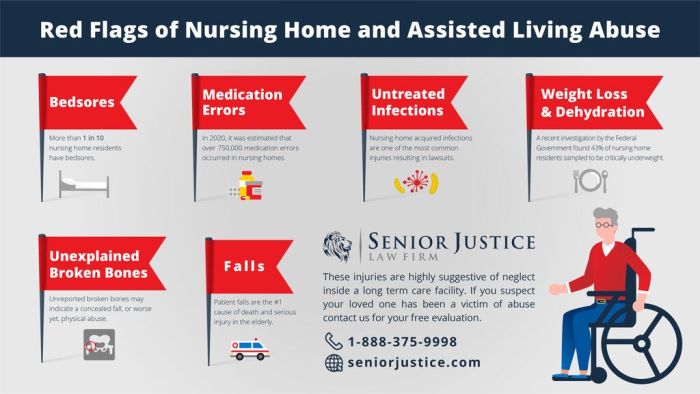
- Physical Abuse: Unexplained bruises, cuts, or fractures, especially in multiple locations, may indicate physical abuse. Residents may also exhibit fear or discomfort around certain staff members.
- Emotional Abuse: Signs of emotional abuse include sudden changes in behavior, withdrawal from activities, depression, or anxiety. Residents may also display fear of speaking openly or seem hesitant to interact with others.
- Financial Abuse: Missing personal belongings, unauthorized withdrawals, changes in financial documents, or sudden inability to pay bills can be indicators of financial abuse. Residents may also show confusion about their financial situation.
Neglect and Malnutrition as Abuse Signs
Neglect can manifest as untreated medical conditions, poor personal hygiene, bedsores, or inadequate supervision. Malnutrition may present as weight loss, dehydration, or signs of malnourishment such as pale skin, brittle hair, or fatigue.
Legal Aspects
Nursing home abuse is a serious issue that is not only morally wrong but also illegal. There are laws in place to protect nursing home residents from abuse and neglect, ensuring they receive the proper care and attention they deserve.
Understanding these laws is crucial in addressing and preventing abuse in nursing homes.
Laws Protecting Nursing Home Residents
- The Nursing Home Reform Act of 1987 sets federal standards for nursing homes participating in Medicare and Medicaid programs. These standards include requirements for quality of care, residents' rights, and prevention of abuse.
- State laws also play a significant role in protecting nursing home residents. These laws may vary from state to state but generally cover issues such as abuse, neglect, exploitation, and resident rights.
- Common types of nursing home abuse that are prohibited by law include physical abuse, sexual abuse, emotional abuse, financial exploitation, and neglect.
Legal Recourse for Victims
- Victims of nursing home abuse have legal recourse to seek justice and hold the responsible parties accountable for their actions. They can file lawsuits against the nursing home, staff members, or individuals involved in the abuse.
- Legal remedies for victims of nursing home abuse may include compensation for medical bills, pain and suffering, emotional distress, and punitive damages to punish the wrongdoers.
- It is important for victims to seek the help of a skilled nursing home abuse lawyer who can guide them through the legal process, gather evidence, and advocate for their rights in court.
Role of a Nursing Home Abuse Lawyer
- A nursing home abuse lawyer specializes in handling cases of abuse and neglect in nursing homes. They have the knowledge and experience to navigate the complex legal system and fight for justice on behalf of their clients.
- These lawyers can investigate the abuse, gather evidence, interview witnesses, and build a strong case to hold the negligent parties accountable.
- A nursing home abuse lawyer can also negotiate settlements with the nursing home or pursue litigation in court to ensure that victims receive the compensation they deserve and that the abuse is stopped.
Steps to Take if Nursing Home Abuse is Suspected
If you suspect nursing home abuse, it is crucial to take immediate action to ensure the safety and well-being of the residents. Here are the steps you should follow to address suspected abuse:
Documenting and Reporting Suspected Abuse
- Document any signs or symptoms of abuse that you have observed. Include details such as dates, times, and specific incidents.
- Take photographs of any physical injuries or bruises as evidence of abuse.
- Report your suspicions of abuse to the nursing home administration and ask for a written report of the incident.
- Contact the local Adult Protective Services or Long-Term Care Ombudsman program to report the abuse.
Involving Authorities or Agencies
- Contact law enforcement if there is immediate danger or a crime has been committed.
- Seek legal advice from a nursing home abuse lawyer to understand your rights and options for pursuing legal action.
- Consider filing a complaint with the state licensing agency or Department of Health if the nursing home is not addressing the abuse allegations.
- Cooperate with any investigations by authorities or agencies to ensure the safety of the residents and hold the responsible parties accountable.
Importance of Seeking a Nursing Home Abuse Lawyer
Seeking a nursing home abuse lawyer is crucial in cases where vulnerable individuals have suffered mistreatment or neglect in care facilities. These legal professionals play a vital role in advocating for the rights of victims and holding responsible parties accountable for their actions.
How a Lawyer Can Help Investigate and Build a Case
- Lawyers have the expertise to investigate claims of nursing home abuse thoroughly, gathering evidence such as medical records, witness statements, and surveillance footage.
- They can work with medical experts to assess the extent of harm caused to the victim and determine the appropriate course of legal action.
- Lawyers can also help build a strong case by analyzing the facts, identifying legal violations, and developing a strategy to seek justice for the victim.
Benefits of Legal Representation for Victims of Nursing Home Abuse
- Legal representation provides victims with a voice to speak up against abuse and seek compensation for their suffering.
- Lawyers can negotiate with insurance companies and nursing home facilities to ensure victims receive fair compensation for their injuries and losses.
- Having a lawyer on their side gives victims access to legal resources and support throughout the entire legal process, from filing a claim to pursuing a lawsuit in court.
End of Discussion
In conclusion, the signs of nursing home abuse should never be ignored. Seeking the help of a nursing home abuse lawyer is vital in ensuring justice and protection for vulnerable individuals. Remember, taking action against abuse is not just a legal obligation but a moral one as well.
Question & Answer Hub
What are some common signs of nursing home abuse?
Common signs include unexplained injuries, sudden changes in behavior, and unexplained financial transactions.
What legal recourse is available to victims of nursing home abuse?
Victims can pursue civil lawsuits against the facility, file complaints with regulatory agencies, or seek criminal charges against the abuser.
How can a nursing home abuse lawyer help in building a case?
A lawyer can gather evidence, interview witnesses, and navigate complex legal procedures to strengthen the victim's case.